Federal Supreme Council

Constitutional Governance

Exploring the apex of UAE governance — the Federal Supreme Council, its constitutional mandate, and the ministry that ensures its effective operation.

The Federal Supreme Council

The Federal Supreme Council is the highest constitutional, legislative, and executive authority in the United Arab Emirates. Comprised of the rulers of all seven emirates, it serves as the ultimate governing body responsible for setting the strategic direction of the federation.

The Council holds sovereign powers including formulating general policies, endorsing and ratifying federal laws, approving the annual federal budget, sanctioning federal decrees, ratifying international treaties, and appointing key officials including the Prime Minister and Supreme Court judges.

As Minister of Federal Supreme Council Affairs, H.E. Al Ketbi serves as the institutional bridge between this supreme authority and the executive machinery of the federal government — ensuring that the Council's directives are translated into actionable policy with precision and fidelity.
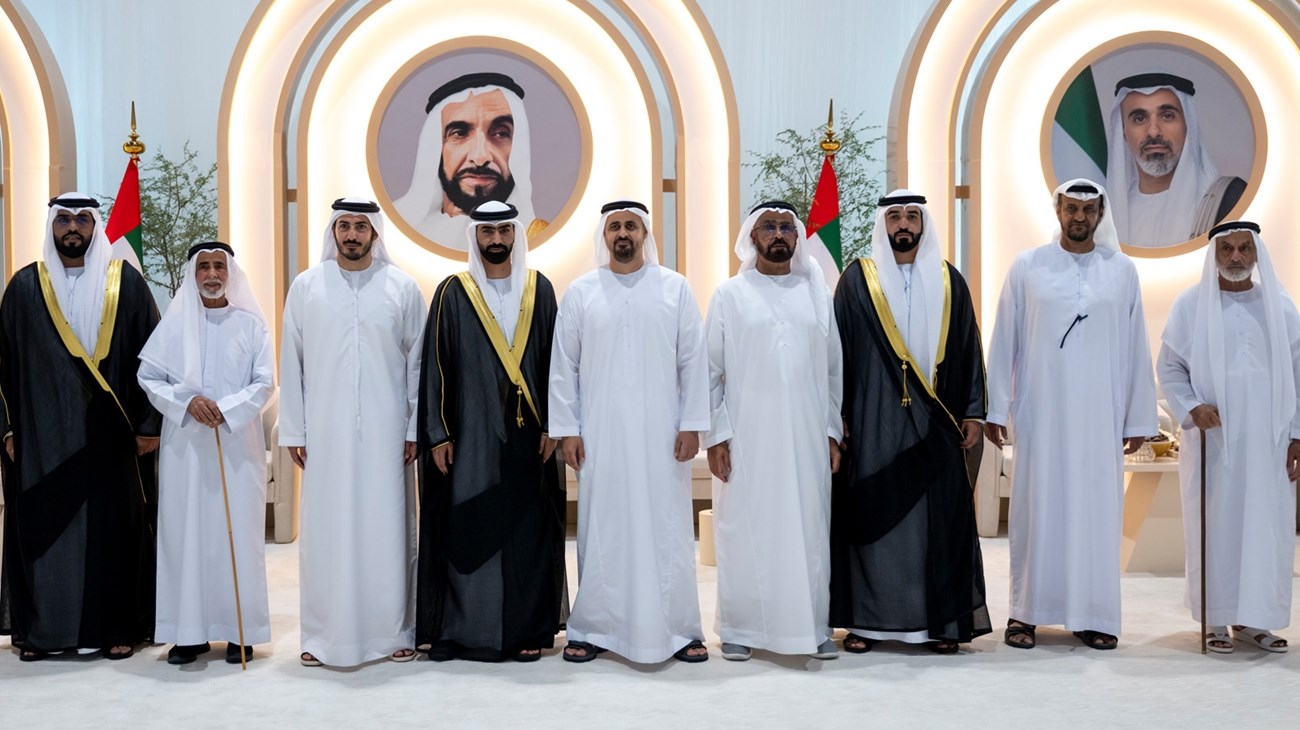
UAE Federal Council gathering

Powers & Responsibilities

The constitutional functions of the Federal Supreme Council that define the UAE's governance architecture.

Legislative Authority
Endorsing and ratifying all federal laws before they are issued — ensuring that every piece of legislation reflects the collective will and interests of the seven emirates.
Policy Formulation
Drawing up general policies on all matters concerning the federation — from economic strategy to defense, social welfare to international relations — achieving the objectives of the Union.
Treaty Ratification
Ratifying international treaties and agreements through federal decrees — positioning the UAE's diplomatic commitments within the constitutional framework of the federation.
Budget Approval
Endorsing the annual federal general budget and closing accounts — exercising fiscal oversight that ensures responsible allocation of national resources.
Executive Appointments
Approving the appointment of the Prime Minister and key judicial officials — ensuring that the most qualified individuals serve in the highest executive and judicial capacities.
Federal Oversight
Exercising supreme control over the affairs of the federation — the ultimate check on all federal operations, policies, and strategic decisions affecting the nation.

Seven Emirates, One Union

The constitutional framework that balances emirate autonomy with federal unity.

Abu Dhabi
Federal capital and largest emirate — seat of the Presidency and principal economic engine of the federation.
Dubai
Global commerce hub — seat of the Vice Presidency and driving force behind the UAE's international brand.
Sharjah
Cultural capital — UNESCO-recognized for preserving Islamic heritage and advancing educational excellence.
Ajman
Smallest emirate — rapidly developing its economic base through strategic positioning and free zone initiatives.
Umm Al Quwain
Maritime heritage emirate — preserving traditional culture while embracing sustainable coastal development.
Ras Al Khaimah
Northern gateway — leveraging strategic location and natural resources for industrial and tourism growth.
Fujairah
Eastern coastline emirate — the UAE's only Indian Ocean-facing member, vital for maritime trade diversification and strategic oil storage.

How the Council Decides

Substantive Resolutions — Dual Veto System
Substantive resolutions require a majority of five out of seven members — with the critical requirement that this majority must include the votes of both Abu Dhabi and Dubai. This constitutional mechanism ensures that the federation's two principal emirates serve as stabilizing pillars, preventing centralizing measures that lack broad-based support.
This dual-veto system reflects the founders' wisdom in creating a governance structure that balances demographic and economic realities with the principle of emirate sovereignty — ensuring that no major policy can be enacted without genuine consensus among the federation's key stakeholders.
Procedural Matters — Simple Majority
For procedural and administrative matters, the Council operates on a simple majority basis — enabling efficient governance on routine operational decisions without requiring the weighted majority needed for substantive policy changes.
This tiered decision-making framework ensures that the Council can operate with agility on day-to-day governance while maintaining rigorous consensus requirements for decisions that fundamentally shape the federation's trajectory.
Deliberation Protocols
The Council maintains strict confidentiality in its deliberations — a constitutional provision that enables candid dialogue between the rulers on sensitive national matters, from security concerns to economic strategies and diplomatic initiatives.
The General Secretariat, overseen by the Ministry of Federal Supreme Council Affairs, provides the administrative backbone that supports these deliberations — preparing agendas, circulating documents, recording decisions, and ensuring follow-through on resolutions.